


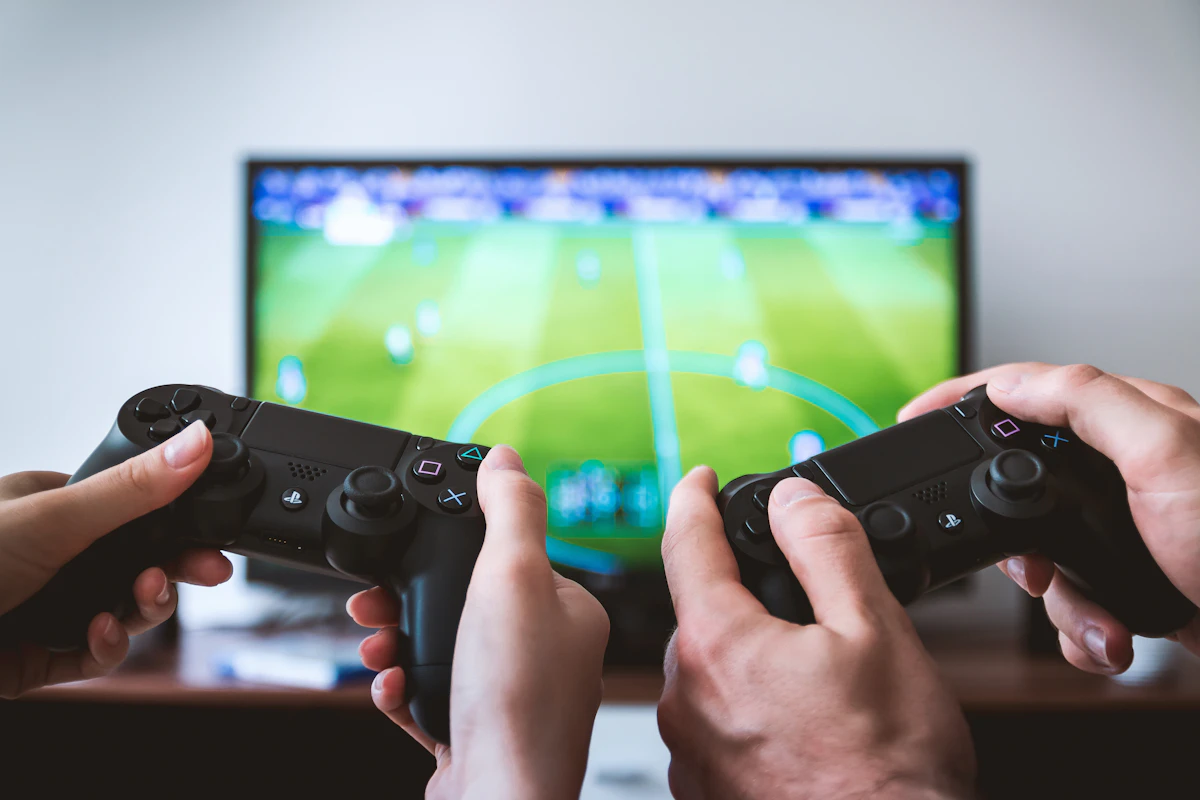
Cloud gaming has been "the next big thing" for long enough that a lot of people have stopped paying attention to it. Early attempts were held back by choppy video, noticeable input lag, and a limited selection of games, which gave the whole idea a reputation it has struggled to shake. In 2026, the technology underneath has quietly improved a lot, faster server hardware, smarter compression, and much better network infrastructure, to the point where it is worth asking the question again with fresh eyes: can streaming a game from a data center actually replace owning a console or a gaming PC?
What Cloud Gaming Actually Is
At its core, cloud gaming means the actual game is running on a powerful computer in a data center somewhere, while your device, a phone, laptop, smart TV, or low powered streaming box, is just displaying the video and sending your button presses back over the internet. This is the same basic idea as streaming a movie, except the video is being generated in real time based on what you are doing, which makes it far more sensitive to delay than a pre recorded video ever would be.
Because the heavy processing happens remotely, cloud gaming lets you play graphically demanding games on hardware that could never run them locally, a budget laptop or an older phone can suddenly run a game that would normally require an expensive graphics card, as long as the connection holds up.
The Latency Problem, and How Much Better It Has Gotten
The single biggest challenge for cloud gaming has always been latency, the delay between pressing a button and seeing the result on screen. Early services suffered from noticeable lag that made fast paced games feel sluggish and unresponsive, which was enough to turn away a lot of potential users after a single bad session.
Data center locations have since multiplied and moved closer to major population centers, compression technology has gotten smarter about prioritizing the data that matters most for responsiveness, and home internet speeds have generally improved. The result is that, on a good connection, modern cloud gaming latency is often low enough that casual and even moderately competitive players stop noticing it, though twitch reflex esports players can usually still feel a difference compared to playing locally.
Where Cloud Gaming Genuinely Shines
Cloud gaming is at its best when it removes a barrier that would otherwise stop someone from playing at all. Trying a demanding new release on a laptop that could never run it locally, picking up a game on a smart TV without owning a console, or continuing a session on a phone during a commute after starting it at home are all situations where cloud gaming provides real, tangible value that traditional hardware cannot match.
It also shines for people who game casually enough that buying a dedicated console or building a gaming PC never quite feels worth the expense. A subscription that lets someone play a rotating library of games on hardware they already own can make a lot more financial sense than a large upfront hardware purchase, especially for someone who might only play seriously for a season or two.
Where a Console or PC Still Wins
Owning the hardware still has clear advantages that cloud gaming has not fully closed. There is zero dependency on internet quality once a game is installed locally, no monthly subscription required just to keep playing games you already own, and no risk of a service shutting down and taking your access to a library along with it.
Competitive and fast paced multiplayer games are also still generally better experienced on local hardware, where every fraction of a second of input delay can matter. And for anyone who prefers to actually own their games outright, resell old titles, or play offline without worrying about a connection, physical or locally installed hardware remains the more straightforward option.
The Subscription Math: Is It Actually Cheaper?
Whether cloud gaming saves money depends heavily on how someone actually plays. For a casual player who dips in and out over the years, a monthly subscription can end up costing far less than a console purchase plus a stack of individual game purchases, especially if the subscription includes a rotating library rather than requiring separate purchases.
For a dedicated gamer who plays for years on the same hardware and keeps a personal library of titles, owning hardware outright is often the cheaper long term option, since a subscription fee that continues indefinitely can eventually add up to more than a one time hardware purchase would have cost. Neither approach is objectively cheaper, it genuinely depends on play habits.
Internet Requirements Nobody Tells You About
Cloud gaming's biggest hidden requirement is a stable, reasonably fast internet connection, and stability actually matters more than raw speed for most people. A connection that is fast on paper but prone to brief drops or spikes in latency, common with some wireless or shared connections, can produce a noticeably worse experience than a slower but more consistent wired connection.
Data usage is another factor that catches people off guard. Streaming a game for a couple of hours can use a meaningful amount of data, which matters for anyone on a capped home internet plan or trying to play over a mobile hotspot, and is worth checking before committing to cloud gaming as a primary way to play.
Who Cloud Gaming Actually Makes Sense For
Cloud gaming tends to make the most sense for casual and social gamers, people who want to try a wide variety of games without buying each one, families who want to let multiple people play different games on shared devices, and anyone whose primary devices are not powerful enough to run modern games locally.
It tends to make less sense for competitive multiplayer specialists, anyone with an unreliable internet connection, or players who strongly prefer owning their game library outright rather than relying on continued access through a subscription. Knowing which category you fall into is usually enough to answer the console versus cloud question without needing to test both extensively.
What Would Need to Change for Mass Adoption
For cloud gaming to become the default way most people play rather than a niche alternative, a few things likely need to keep improving: even more widespread access to fast, stable, and affordable home internet, continued expansion of data center locations to keep latency low across more regions, and pricing models that feel clearly fair compared to buying hardware and games outright.
None of these are small problems, but none of them are stalled either. Each year brings incremental improvement on all three fronts, which suggests cloud gaming's share of the overall gaming market will likely keep growing steadily rather than arriving all at once in some dramatic tipping point moment.
Game Selection and Library Limitations
One practical detail that matters more than people expect is exactly which games are actually available on a given cloud service, and under what terms. Some platforms offer a rotating subscription library where titles can be added or removed over time, while others let you stream games you already purchased separately, which changes the calculation considerably depending on which model a service uses.
Rotating libraries are great for casual variety but mean a favorite game could disappear from the service down the line, while purchase based streaming keeps access tied to titles you own outright but usually costs more upfront. Checking which model a service uses, and whether the specific games you actually want to play are included, is a more useful step than comparing services purely on price or advertised game counts.
Cloud Gaming on Mobile Devices Specifically
Phones and tablets are where cloud gaming's value proposition feels most dramatic, since they let a lightweight device run games that would be completely impossible to run locally on the same hardware. This has opened up demanding titles to people who only ever carry a phone, without requiring a separate purchase of gaming hardware.
The catch on mobile is that touchscreen controls are a poor substitute for a proper controller in many game genres, so a lot of the mobile cloud gaming experience depends on pairing a phone with a physical controller, either handheld or connected over Bluetooth, to get results that feel comparable to console play. Mobile data usage and battery drain during extended play sessions are also worth factoring in before treating a phone as a primary gaming device.
Privacy and Data Considerations
Because cloud gaming routes everything through a remote server, it is worth being aware that play sessions, purchase history, and account activity are visible to the platform in ways that are somewhat different from playing entirely offline on owned hardware. This is not unique to gaming, most modern digital services work this way, but it is a reasonable factor for privacy conscious users to weigh.
Reading a service's privacy policy before signing up, particularly around what activity data is collected and how long it is retained, is a sensible habit regardless of which cloud gaming platform someone chooses, the same way it is worth doing for any subscription service that requires an account and payment details.
The Environmental and Practical Angle
Sharing powerful hardware across many users in a data center can be more resource efficient than millions of individual households each owning underused gaming hardware that sits idle most of the time. That efficiency argument is genuinely interesting, though it depends heavily on how the data centers themselves are powered and cooled.
On a more practical note, cloud gaming also means less physical clutter, no console taking up space under the television, no stack of discs or cartridges, and no hardware to eventually recycle or dispose of when it becomes outdated. For anyone who values a minimal setup, that alone can be a meaningful point in cloud gaming's favor.
Setting Up for the Best Possible Experience
A handful of simple steps make a bigger difference to cloud gaming quality than most people expect. Using a wired ethernet connection instead of Wi-Fi whenever possible removes a common source of inconsistent latency, and positioning a router closer to the device you play on can noticeably reduce dropped frames during a session.
Closing other bandwidth heavy activity on the same network while playing, a household member streaming video or downloading a large file, also helps keep the connection stable enough for smooth cloud gaming. None of these steps require technical expertise, but together they often make the difference between a session that feels laggy and frustrating and one that feels genuinely close to playing on local hardware.
A Realistic Look at Where This Is Heading
The trajectory over the past several years has been consistently upward: better compression, lower latency, wider game selection, and more forgiving pricing. Nothing about that trend suggests cloud gaming is plateauing, which makes it reasonable to expect the gap between streaming and local hardware to keep narrowing gradually rather than staying fixed at today's level.
At the same time, physical hardware is not standing still either, consoles and gaming PCs keep getting more powerful and more convenient in their own right. The realistic future probably is not one technology fully winning, but rather both options continuing to coexist, with individual players gravitating toward whichever fits their internet situation, budget, and play style best.
So is cloud gaming finally good enough to replace a console in 2026? For a meaningful and growing group of casual and convenience focused players, yes, it genuinely is. For competitive players, people with unreliable internet, or anyone who values owning a library outright, traditional hardware still makes more sense. Rather than one technology fully replacing the other, the more accurate picture is that cloud gaming has grown into a legitimate third option sitting alongside consoles and gaming PCs, each suited to a different kind of player and a different way of enjoying games. It is a debate worth revisiting personally every year or two as internet speeds, pricing, and available titles keep shifting the balance in small but meaningful ways.
Editorial note: This guide is written for everyday readers. It focuses on practical understanding, safe choices, and clear trade-offs rather than hype.
Media credits: Main image credit: Unsplash. Video credit: Cloud Gaming Battle via YouTube.